When Perfect Logic Becomes a Perfect Trap
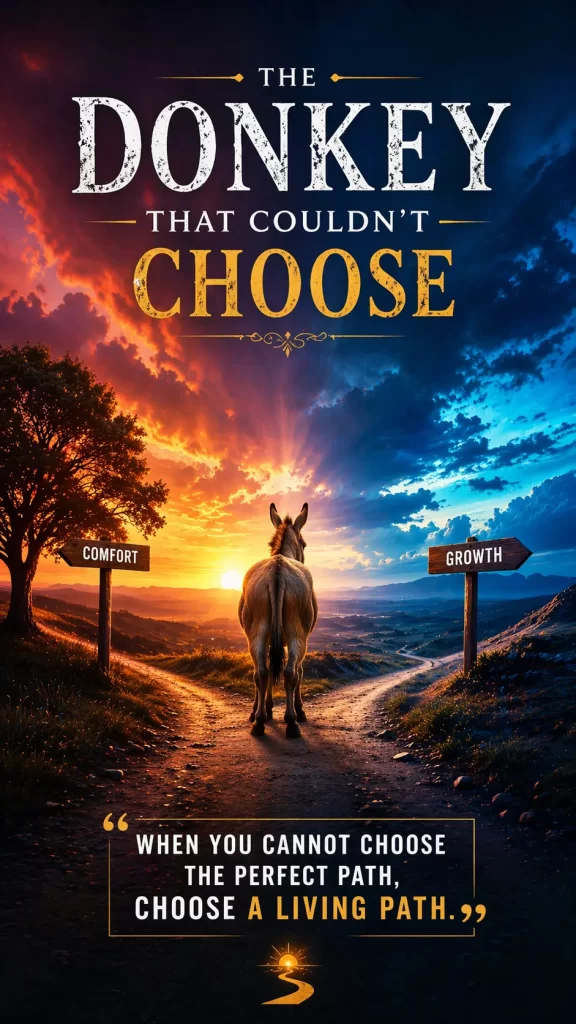
There is something strangely memorable about a donkey that does nothing. Not because it is lazy. Not because it is weak. But because it is too rational. This is the enduring charm of Buridan’s Donkey—a hypothetical animal standing helplessly between two equally attractive choices. In your attachment, the donkey is placed exactly midway between hay and water, equally hungry and thirsty, and unable to justify one move over the other. So, it stays frozen, and in theory, perishes in the middle. Absurdity is what makes the lesson unforgettable.
The Origin of Buridan’s Donkey
The paradox is popularly associated with Jean Buridan, a 14th-century French philosopher linked with medieval discussions of will, reason, and choice. Interestingly, standard reference sources note that the best-known “donkey” version is probably not something Buridan himself stated in that exact form. Britannica notes that in Buridan’s commentary on Aristotle, the example is actually a dog, not a donkey, faced with two equal amounts of food; his discussion points toward the idea that when options are perfectly balanced, a decision may have to occur at random. Scholarly discussions also note that the broader problem predates Buridan and has older roots in philosophical thinking about symmetrical choice. (Encyclopedia Britannica). The story is less about one historical donkey and more about a timeless human problem.
The Paradox - What happens when reason finds no basis for choosing?
The paradox is simple. A donkey stands between two equally compelling options. Neither one is better. Neither one is worse. Reason cannot rank them. Action stalls. That is the heart of the paradox: if a purely rational being can act only when one option is demonstrably superior, then equal options can create paralysis. In that moment, logic stops guiding movement. Rational thought, instead of serving life, begins to block it. Philosophers use the paradox to test the limits of rational decision-making, free will, and the assumption that every action must have a fully sufficient reason behind it. (Encyclopedia Britannica). Buridan’s Donkey therefore is not really about donkeys. It is about us.
The Paradox - What happens when reason finds no basis for choosing?
Why has this strange animal survived for centuries in philosophy?
Because it exposes an uncomfortable truth: Reason is powerful, but reason alone is not always enough.
The paradox serves at least four purposes.
- First, it tests the limits of rational thought. We often assume that if we think long enough, we will discover the perfect answer. Buridan’s Donkey says otherwise. Sometimes no extra thinking will produce clarity because the options are functionally equal.
- Second, it opens the debate on free will. If two choices are equally attractive, can a person still choose? Many philosophers used this problem to ask whether human beings possess some inner power to break symmetry when logic cannot.
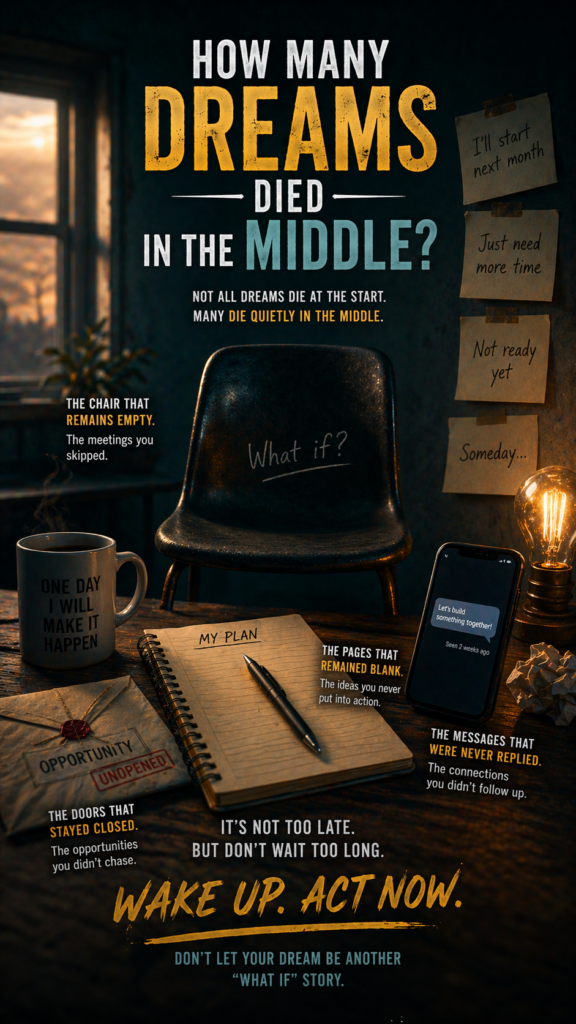
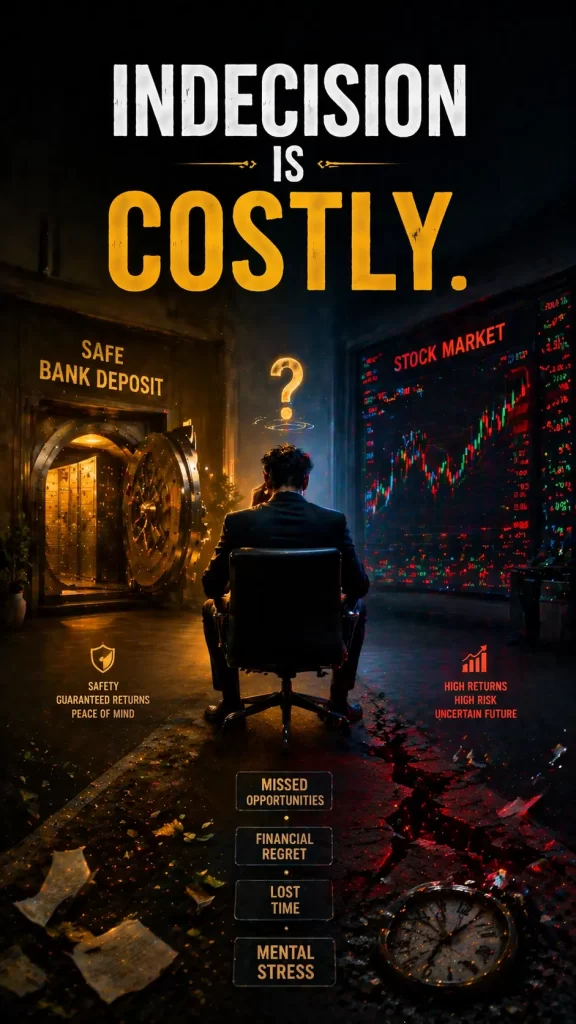
- Third, it reveals the cost of indecision. The danger is not choosing the wrong option. The danger is failing to choose at all.
- Fourth, it reminds us that in real life, movement often depends on something beyond perfect analysis, intuition, urgency, commitment, faith, randomness, or simple willingness to begin.
Real-Life Applications: The Donkey Still Lives Among Us
The beauty of this paradox is that it appears everywhere. Your attachment gives a wonderfully ordinary example: choosing between Indian or Chinese for dinner. Both feel equally tempting. The more one thinks, the less progress one makes. Then a coin is tossed, the deadlock ends, and life moves on. The coin does not reveal a timeless truth about cuisine. It merely breaks the stalemate.
That is the hidden genius here. When reason has done all, it can, a small external nudge can be wiser than endless inner debate.
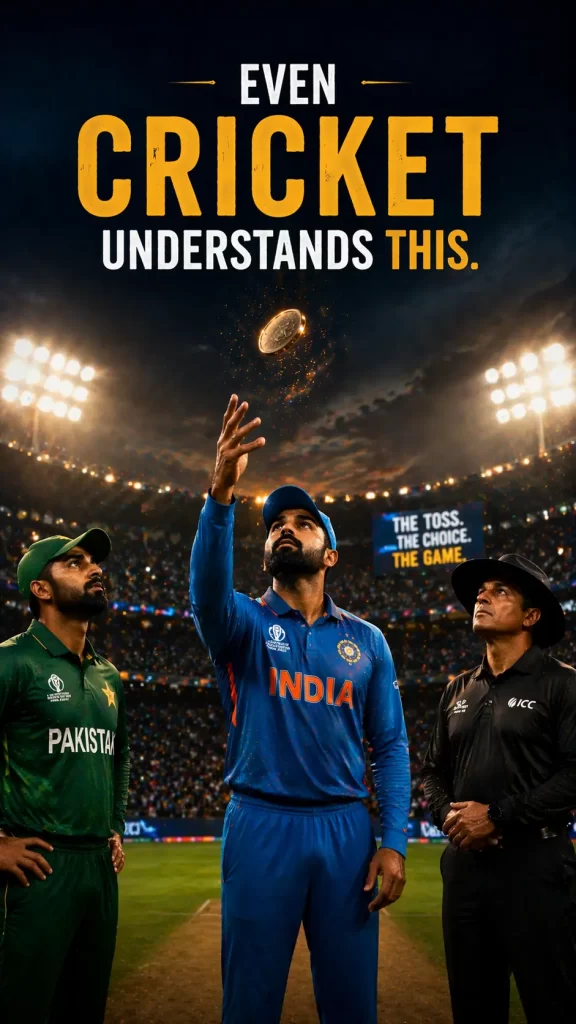
The same principle appears in sport. In cricket, a toss decides who bats first. The toss is random, but the match is not. Performance still decides the outcome. Randomness only settles the starting point.
The same happens in investing. Many people remain stuck between safety and growth—fixed deposits feel too slow, equities feel too risky, the market feels too high, and corrections feel too dangerous. So, they wait. And while they wait, inflation, delay, and missed opportunity quietly do their work. As your attachment rightly suggests, indecision can become a silent thief of progress.
It also appears in careers:
- Stay in the current job or start something new?
- Take the course or wait for a better one?
- Launch now or refine forever?
At times like these, the problem is not lack of intelligence. It is over-dependent on certainty.
What Buridan’s Donkey Teaches about Rational Thought
The hypothetical donkey is a powerful teaching tool because it shows that rationality has a boundary.
Rational thought is excellent for comparing unequal options. It is weaker when options are almost identical. It becomes helpless when options are perfectly balanced.
This is where life asks for another faculty: decision.
Decision is not always the same as proof. Action is not always the same as certainty. And progress is not always born from perfect information. Sometimes the mature move is not to keep calculating but to commit, then adjust.
In other words: Analysis creates clarity. Commitment creates momentum.
Buridan’s Donkey and Direct Selling
This paradox is especially relevant in direct selling, where hesitation destroys more dreams than rejection does.
A distributor may stand between two equally attractive options:
- Should I talk to prospects online or offline?
- Should I focus on product education or business opportunities?
- Should I contact old leads or generate new ones?
- Should I start only when I have the perfect script, perfect team, perfect confidence, perfect product knowledge?
And so, days pass. Then weeks pass. Activity slows. Energy drops. Momentum disappears. That is Buridan’s Donkey in a blazer.
In direct selling, the market rarely rewards the person who waits for the perfect move. It rewards the person who makes a reasonable move and then improves through action.
A prospect may also behave like Buridan’s Donkey:
- “I like the products.”
- “I like the business.”
- “I need to think.”
- “This seems good, but maybe later.”
What do experienced leaders do? They reduce friction and help break the symmetry.
They do this by:
- simplifying choices,
- sharing a clear next step,
- giving a small starter action,
- offering a time-bound decision point,
- using stories instead of information overload.
That is leadership.
A powerful lesson for direct sellers is this: Confusion does not always mean objection. Sometimes it means equal pull without priority.
When prospects or team members are stuck, they do not always need more data. Sometimes they need a gentle nudge:
- “Start with one product.”
- “Attend one meeting.”
- “Speak to five people.”
- “Use the product for seven days.”
- “Take the starter kit and begin.”
Movement creates conviction.
In direct selling, those who win are not always the ones with the most options. They are often the ones who avoid standing too long in the middle.
The Deeper Human Lesson
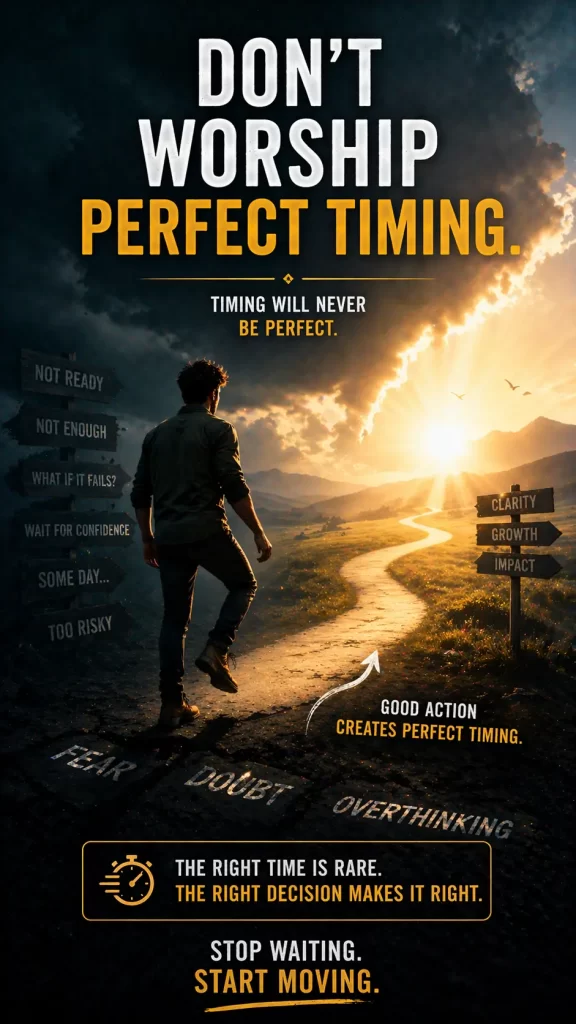
Buridan’s Donkey survives because it reveals a common human weakness: we often worship the perfect decision and underestimate the value of a timely one.
But life is not lived only by those who are certain.
It is lived by those who move.
The donkey dies in theory because it cannot break the tie.
The human being grows in reality by learning how to break ties.
With judgment. With courage. With intuition. With experiment. And yes—sometimes with a coin toss.
Conclusion
Buridan’s Donkey may be hypothetical, but its lesson is painfully real.
It shows us that rational thought is a magnificent servant, but a poor master when choices are equal. It teaches that indecision can be more dangerous than imperfection. It reminds us of that movement often matters more than mathematical certainty.
So, when life places you between two similar bales of hay—two good ideas, two decent opportunities, two workable paths—do not remain trapped in the middle. Choose. Act. Adjust later. Because in business, in investing, in direct selling, and in life itself, progress rarely belongs to the one who thinks forever. It belongs to the one who begins.