
SLEEP, CIRCADIAN HEALTH & RECOVERY
Waking Up at 2 AM - Ancient sleep pattern, modern insomnia or something else?
A night awakening is an event. Whether it is harmless, distressing or clinically important depends on the wider pattern.
A viral story says the eight-hour night was invented by a mattress company—and that waking up at 2 AM is a forgotten doorway to genius. It is memorable. It is also largely false.
The more useful truth is subtler. Historical records describe “first” and “second” sleep in parts of pre-industrial Europe. Laboratory exposure to very long winter darkness has also produced two sleep bouts in a small study. Yet research in three present-day pre-industrial societies found generally consolidated sleep rather than a long nightly wake interval. Human sleep is adaptable; history does not reveal one universal ancestral blueprint.
The myth inside the myth: Eight uninterrupted hours are not mandatory for every adult—but adequate total sleep and healthy daytime functioning still matter.
Eight Hours: Target, Not Commandment
Modern recommendations were not created by Simmons Beautyrest in 1938. Expert groups developed them by reviewing evidence linking habitual sleep duration with health and functioning. The American Academy of Sleep Medicine and Sleep Research Society recommend that healthy adults obtain at least seven hours regularly; the National Sleep Foundation considers seven to nine hours appropriate for most adults, with individual and age-related variation.
That guidance concerns total sleep need—not a guarantee that every healthy night will be perfectly continuous. Brief awakenings can occur between sleep cycles and often pass unnoticed. One disrupted night is not a diagnosis.
The Ten-Image Claim Check
1. “The most dangerous lie…” Sensational and false. Sleep guidance is evidence-informed, not a documented commercial conspiracy.
2. “Simmons invented eight hours in 1938.” Unsupported. No credible historical evidence establishes this claim.
3. “Humans always slept 4–2–4.” Overstated. Segmented sleep appears in many European records, but not all cultures or environments show it.
4. “Shakespeare wrote most plays at 1–3 a.m.” No reliable evidence. Historical anecdotes cannot establish a biological creativity window.
5. “Mozart composed symphonies in the God hours.” Unverified. Industrial schedules and lighting did reshape sleep, but they did not create every modern sleep disorder.
6. “Kleitman faked mattress-funded studies.” False and potentially defamatory. Kleitman was a University of Chicago physiologist, founded an early sleep laboratory and published his major scientific synthesis in 1939.
7. “Medicine turned creativity into insomnia.” False. Insomnia is defined by persistent sleep difficulty plus distress or daytime impairment—not merely being awake at night.
8. “You are not an insomniac.” Unsafe as a blanket assurance. Some awakenings are benign; recurrent impaired sleep can be a treatable disorder or a symptom of another condition.
9. “Stop medicating; wake and create.” Potentially harmful. Never stop prescribed medication without the prescriber. Bright light or productive work at night may increase alertness and reinforce waking.
10. “Poor sleep affects health.” Broadly valid, although social posts often oversimplify causation. Sleep supports attention, mood, metabolism, cardiovascular health and recovery.
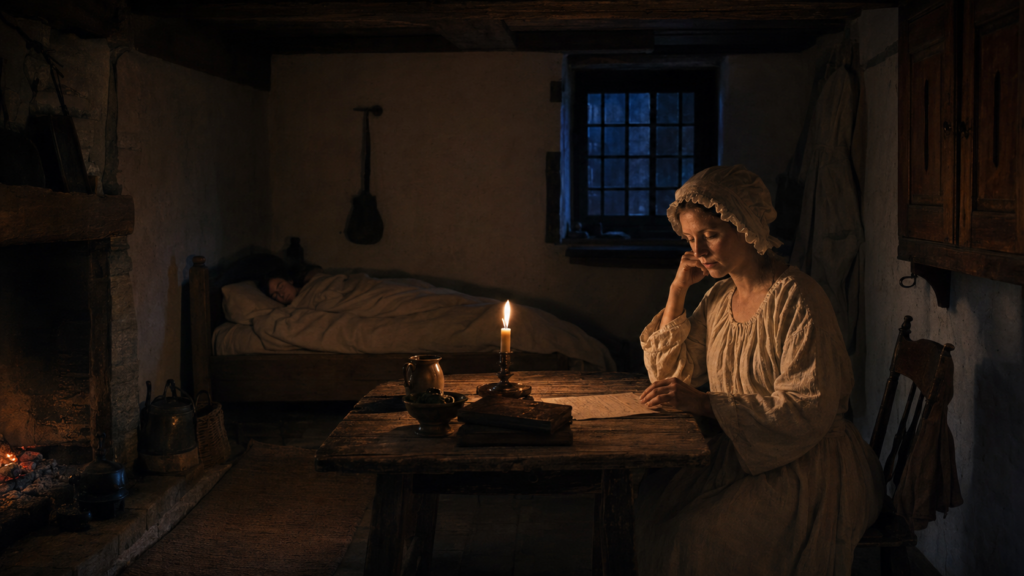
Historical segmented sleep is credible evidence of human flexibility not proof that everyone should adopt it
Nathaniel Kleitman Deserves Correction not Accusation
Kleitman is widely regarded as a founder of modern sleep science. His records at the University of Chicago document the first sleep laboratory there and his 1939 book, Sleep and Wakefulness. His laboratory later helped establish REM sleep with Eugene Aserinsky. The carousel supplies no credible evidence of falsified research or Simmons funding.
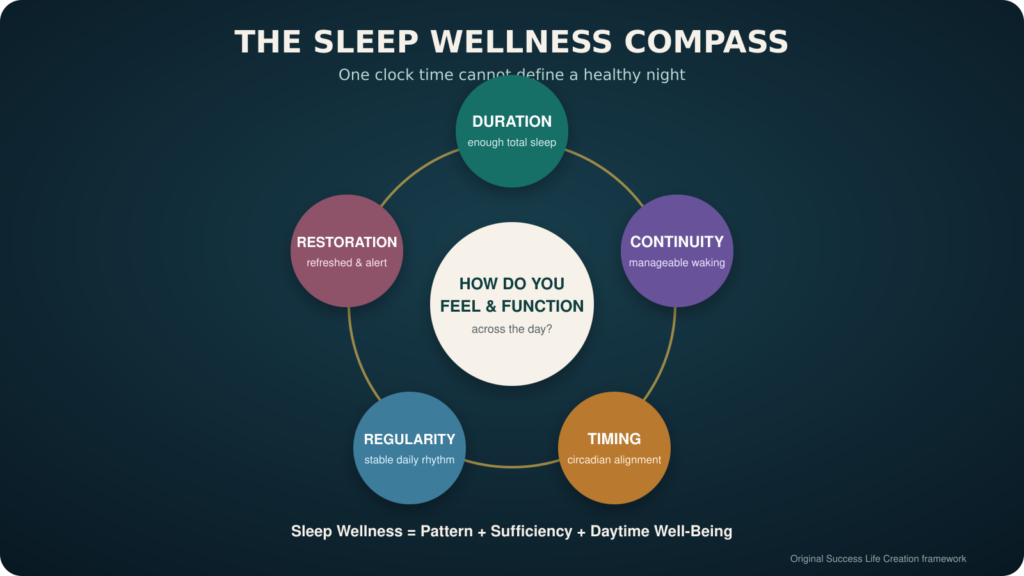
Original SLC framework: judge the whole sleep pattern—not one clock reading.
When Is a 2 A.M. Awakening Probably Benign?
Occasional waking up at 2 AM may be unremarkable when you remain calm, return to sleep reasonably easily, obtain enough total sleep and feel alert and functional during the day. The exact time is not biologically sacred; it depends on bedtime, sleep stage, circadian timing and environmental triggers.
When Does It Deserve Attention?
- Frequency and persistence: difficulty staying asleep happens repeatedly over weeks or months.
- Daytime impact: fatigue, sleepiness, irritability, low mood, poor concentration or impaired work and driving.
- Breathing clues: loud snoring, witnessed pauses, gasping, morning headaches or marked daytime sleepiness.
- Body clues: pain, reflux, hot flushes, restless legs, frequent urination, palpitations or breathlessness.
- Timing clues: shift work, jet lag, very early sleep timing or large weekday–weekend changes.
- Substances and medicines: late caffeine, alcohol, nicotine, stimulants, steroids, decongestants or other treatments that can disturb sleep.
Clinical distinction: Night waking alone is not insomnia. Insomnia involves difficulty sleeping despite adequate opportunity, together with distress or impaired daytime functioning.
The SLC Sleep Wellness Formula
Sleep Wellness = Adequate Duration + Circadian Alignment + Restorative Quality + Daytime Function
Continuity matters, but perfection is the wrong target. A person who briefly wakes and functions well may be healthier than someone who sleeps uninterrupted for too few hours and struggles through the day.
Do Not Turn Segmented Sleep into a Productivity Hack
The historical record does not justify deliberately waking at 2 a.m., shortening total sleep or forcing polyphasic schedules. Experimental segmented sleep emerged under fourteen-hour dark periods—not under phones, deadlines and alarm clocks. If a natural pause is peaceful and total sleep remains sufficient, it need not become a catastrophe. If it is prolonged or impairing, romanticising it can delay care.
A Clinically Safer Middle-of-the-Night Reset
1. Do not make the clock your judge. Turn the display away. Avoid calculating how little sleep remains.
2. Reduce effort, not sleep opportunity. Use a neutral thought: “Being awake is uncomfortable, not dangerous. I can rest without forcing sleep.”
3. Keep night recognisably dark. Avoid scrolling, email, bright overhead light and stimulating work. Use only dim, warm light if movement is necessary.
4. If calm, remain comfortable. A brief awakening may settle without intervention. Gentle, unforced breathing or progressive muscle relaxation can reduce arousal.
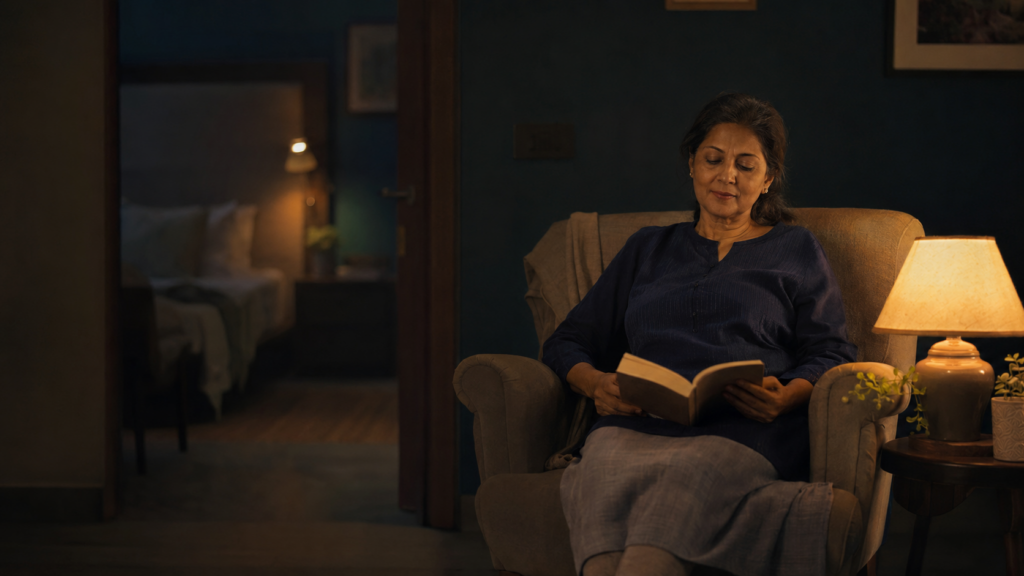
5. If wakefulness becomes frustrating, leave the bed. CBT-I stimulus control advises moving to a dim, quiet place and doing something low-stimulation. Return only when sleepy. The familiar 15–20 minutes is an estimate—do not time it.
6. Protect the next morning. Rise near your usual time, obtain morning light and avoid compensating with a very long lie-in. Regularity helps anchor the body clock.
7. Track the pattern, not one bad night. For two weeks, note bedtime, estimated awakenings, rise time, substances, symptoms and daytime function. Wearables estimate sleep; they do not diagnose disorders.
When Professional Assessment Matters
Speak with a qualified clinician when the pattern is persistent, distressing or impairing; when there is loud snoring or gasping; or when pain, mood symptoms, menopause, nocturia, reflux, breathing difficulty or medication effects may be involved. CBT-I is recommended as first-line care for chronic insomnia. Sleep restriction within CBT-I should be professionally guided when there is significant sleepiness, bipolar disorder, seizure risk, falls risk or safety-sensitive work.
Seek urgent medical care for chest pain, severe breathlessness, fainting, new neurological symptoms, or risk of harming yourself or others. Never stop a prescribed sleep, psychiatric or other medication because of a social-media post or this article.
The balanced conclusion: Do not fear every awakening. Do not worship it either. Listen to the whole pattern—night and day.
The real lesson of waking up at 2 AM is not that modern medicine invented insomnia. It is that sleep is variable, context matters, anxiety can amplify wakefulness, and persistent impairment deserves evidence-based care.
Clinical & Research Notes
Sources include: Watson et al., AASM/SRS adult sleep-duration consensus (2015); Hirshkowitz et al., National Sleep Foundation duration recommendations (2015); NHLBI insomnia guidance; Qaseem et al., ACP chronic-insomnia guideline (2016); Ekirch, historical segmented-sleep research; Boyce, reconsideration of segmented sleep (2023); Yetish et al., sleep in three pre-industrial societies (2015); Wehr, long-photoperiod laboratory study (1992); University of Chicago Nathaniel Kleitman archive; Walker et al., CBT-I primer (2022). Educational content only—not diagnosis or individual treatment.