
The Nocebo Effect
How Negative Words from a Doctor Can Make You Feel Sicker
A patient enters the consultation room worried but functional. After the examination, the doctor says, “This condition is very difficult. You may never recover completely, and the treatment has many unpleasant side effects.”
Nothing biological has changed in that instant. Yet the patient’s heartbeat quickens. Muscles tighten. Every sensation becomes suspicious. By evening, discomfort feels stronger; the next dose is approached with fear.
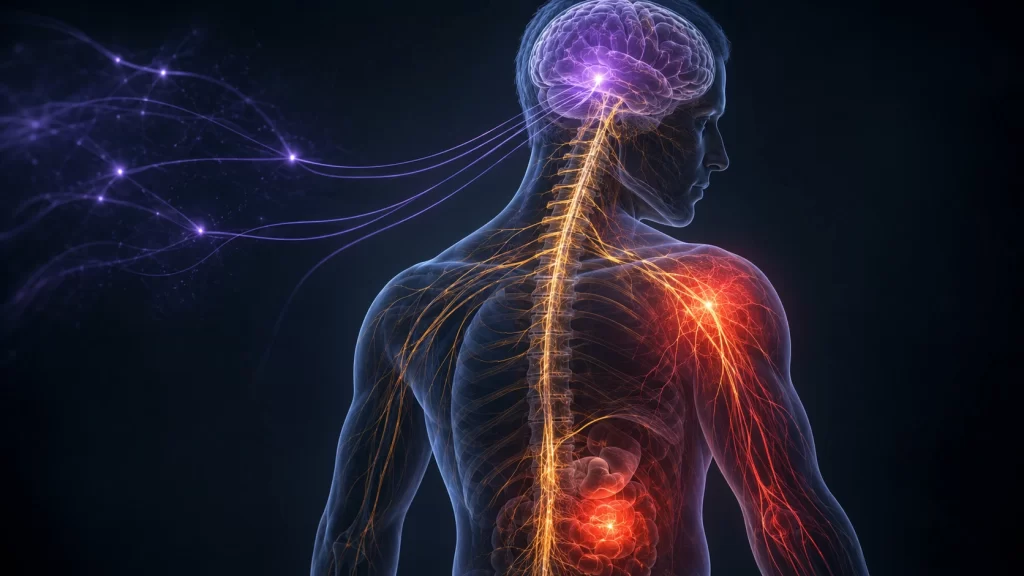
This is one pathway through which the Nocebo Effect can operate. Negative expectations created by words, prior experiences, observation or frightening information can contribute to new symptoms, intensify existing ones or increase the likelihood that ordinary sensations are interpreted as treatment-related harm.
The symptom is real: A nocebo-related headache, pain flare, nausea or fatigue is not “fake.” Expectation can alter attention, anxiety, autonomic activity and pain processing. At the same time, genuine disease progression and medication reactions must never be dismissed as nocebo without proper assessment. |
Placebo’s Lesser-Known Twin
Most people know the placebo effect: positive expectations and the treatment context can improve some outcomes even when the specific intervention is inactive. Nocebo—Latin for “I shall harm”—describes the opposite direction. An inert treatment or an active treatment may be accompanied by worse symptoms when harm is strongly expected.
Clinical trials reveal the principle clearly: people receiving placebo tablets sometimes report headaches, fatigue, muscle pain or nausea despite receiving no active drug. This does not mean all reported adverse effects are nocebo. It shows that expectation and context contribute to the total experience of treatment.
The Nocebo Effect is especially relevant to symptoms that the brain actively interprets—pain, itch, dizziness, nausea, fatigue and perceived medication intolerance. It can also influence adherence: when treatment becomes associated with fear, patients may skip doses or discontinue useful care.
How Can Words Change Physical Experience?
1. Expectation Becomes a Prediction
The brain is not a passive recording device. It continuously predicts what incoming sensations may mean. If a trusted authority says, “This will hurt badly,” the nervous system may prepare for threat before the procedure begins.
2. Attention Turns Up the Volume
Once a side effect is expected, normal bodily fluctuations receive extra surveillance. A minor ache that would ordinarily pass unnoticed becomes evidence that the feared reaction has started.
3. Anxiety Activates the Stress Response
Threatening communication can increase anticipatory anxiety, muscle tension and autonomic arousal. These responses may themselves worsen pain, nausea, breathlessness or gastrointestinal discomfort.
4. Learning Reinforces the Pattern
A previous bad experience, a family story or alarming media coverage can condition future responses. The treatment is no longer only a tablet or procedure; it carries a remembered warning.
The Doctor’s Words: Accurate but Potentially Harmful
Doctors have an ethical duty to explain diagnoses, uncertainty, benefits and material risks. The answer is not to conceal information or promise outcomes that cannot be guaranteed. The challenge is framing truthful information without converting possibility into prophecy.
Compare these two approaches:
Threat-centred wording | Balanced, honest wording |
Threat-heavy: “This injection is going to be very painful.” | Balanced: “You may feel a brief pressure or sting; I’ll guide you through it, and it usually settles quickly.” |
Fatalistic: “Your back is worn out. You will always have this problem.” | Balanced: “The scan shows age-related changes. Many people improve function with the right plan; let us identify what is safe and realistic for you.” |
Side-effect focused: “This medicine commonly causes terrible nausea.” | Balanced: “Some people notice nausea, while many do not. Here is what to watch for, what may help and when to contact us.” |
What *The Biology of Belief* Adds—and Where Caution Is Needed
In *The Biology of Belief*, cell biologist and author Dr. Bruce H. Lipton popularises a hopeful mind–body message: beliefs and perceptions can influence biological responses, and human biology should not be understood as rigid genetic destiny. This perspective has helped many readers pay closer attention to the environment created by thoughts, emotions and meaning.
That broad theme connects naturally with nocebo research: what a person expects can influence stress physiology, symptom perception and behaviour. However, Lipton extends the argument into claims about consciousness, epigenetics and biology that go beyond what mainstream clinical research has established.
Science-aligned takeaway: Beliefs can influence some biological processes and health behaviours; they do not give a person unlimited control over genes, cure disease by thought alone or make patients responsible for becoming ill. The nocebo effect is a contributor to experience—not a universal explanation. |
The Patient’s Role: Informed, Not Frightened
Patients cannot control every expectation, but they can ask questions that replace vague fear with useful information:
- How likely is this side effect, and how many people do not experience it?
- Is it usually mild and temporary, or does it require urgent attention?
- What can I do if it occurs?
- What are the benefits of treatment compared with the risks?
- Could you explain that result without catastrophic language?
- If I notice a symptom, should I continue the medicine or contact you first?
Never stop prescribed medication because you suspect a nocebo response. New, severe or persistent symptoms require assessment; some adverse reactions are pharmacological and medically important.
How Clinicians Can Reduce Nocebo Without Reducing Truth
- Ask permission and preferences. Some patients want detailed probabilities immediately; others understand better when information is paced and contextualised.
- Give absolute risk when possible. “Three in 100 people” is often clearer than an alarming relative-risk statement.
- Pair risk with coping information. Describe what the patient can do, what is reversible and when help is available.
- Distinguish possibility from destiny. Use “may,” “can” and “in some people” accurately rather than language that sounds inevitable.
- End with comprehension and agency. Ask the patient to explain the plan in their own words and invite questions.

Words Can Be Part of Treatment
A consultation contains more than diagnosis and prescription. Tone, facial expression, certainty, metaphors and the order in which information is presented all help create the therapeutic context. One careless sentence may remain in a patient’s mind for years; one balanced explanation may restore the confidence required to participate in recovery.
The Nocebo Effect reminds us that communication is not decorative medicine. It is part of medicine. Yet the lesson is not “avoid negative information.” It is “communicate risk in a way that informs the mind without unnecessarily alarming the nervous system.”
For doctors, words should carry honesty and hope together. For patients, a frightening sentence should become the beginning of a question—not the end of possibility.
Final reflection: A diagnosis describes a condition; it should not become a sentence pronounced over a person’s future. Facts matter. Context matters. And the language connecting the two can influence how safely a patient walks forward. |